



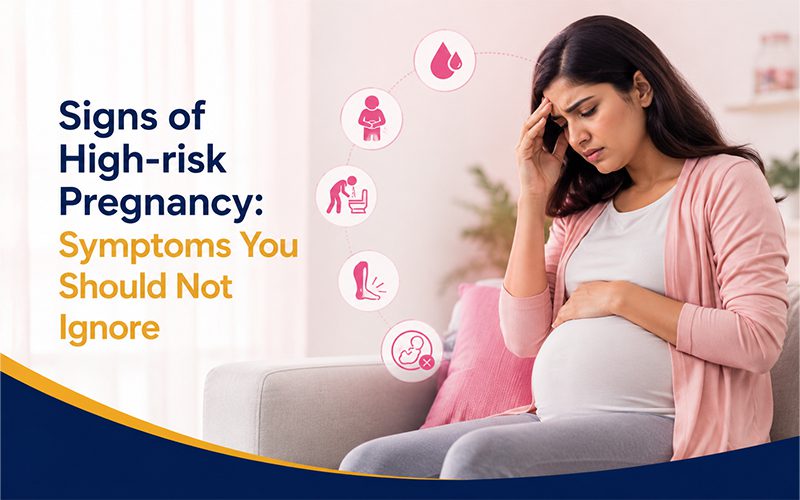
A high-risk pregnancy threatens the health or life of the mother or her fetus. For some women, pregnancies become high risk as they progress, while others are at risk for complications even before conceiving.
Understanding the signs of high-risk pregnancy does not mean expecting the worst. Rather, it empowers you to seek care when needed. The knowledge informs your decisions throughout the pregnancy.
In this article, we are going to explore:
- Common signs that require medical attention
- Factors that contribute to high-risk pregnancy
- When to consult your obstetrician for guidance
Common Signs Requiring Medical Attention
Some of the common signs that call for immediate medical attention from your consulting doctor are as follows:
- Abdominal Pain
- Chest pain
- Extreme fatigue
- Slow or no fetal movement
- Heart palpitations
- Extreme nausea and vomiting
- Severe headache
- Swelling and redness (face and limbs)
- Trouble breathing
- Vaginal bleeding or increased discharge
Let’s take a close look at each of them.
Abdominal Pain
Abdominal pain can pose a serious risk in multiple ways.
- Ectopic Pregnancy: It happens when an egg is implanted outside of the uterus, often within the fallopian tube. The pregnancy cannot be carried to the term. Possible signs include (a) severe discomfort and (b) bleeding between the 6th and 10th weeks.
- Placental abruption: Here, the placenta separates from the uterus prior to birth. You will have (a) persistent stomach discomfort that doesn’t go away; (b) back ache; and (c) blood-filled fluid discharge.
- Preeclampsia: It is defined by elevated blood pressure and protein in the urine beyond 20 weeks of pregnancy. You will have upper abdominal discomfort (typically behind the ribs on the right side) and other symptoms, such as nausea and vomiting.
Chest Pain
Chest pain during pregnancy is often linked to your body’s adaptations for the fetus’s growth and development. For instance, acid reflux is a common reason, resulting from high levels of progesterone. Another reason, in the later stages, could be the expanding uterus, which can exert pressure on the stomach. There’s also added pressure on chest muscles as the rib cage expands to accommodate the uterus and lungs.
In some conditions, the chest pain is less common and may indicate a serious condition
- Cardiac conditions: Peripartum cardiomyopathy develops in the last month of pregnancy or within 5 months of delivery. Your heart muscles weaken, leading to persistent chest pain, severe shortness of breath, swelling, and fatigue.
- HELLP Syndrome: It is a fatal condition occurring in the later stages or shortly after birth. Symptoms of HELLP include [a] abdominal or chest pain; [b] nausea; [c] vomiting; [d] indigestion after eating; [e] headache; [f] shoulder pain while breathing; [g] bleeding; [h] changes in vision; [i] swelling; and [j] difficulty breathing.
Extreme Fatigue
Fatigue ebbs and flows during pregnancy. In the first trimester, it is largely driven by an increase in progesterone and the demand on the heart. Other reasons can be nausea, vomiting, and disturbed sleep.
Severe fatigue becomes alarming when it occurs suddenly, worsens quickly, and accompanies other symptoms. For instance, shortness of breath, headaches, and vision changes.
Slow Or No Fetus Movement
The mother’s perception of reduced fetal movements (RFM) is an important alarm for possible risks. Fewer fetal movements often indicate a clinical concern linked to adverse post-delivery outcomes, such as fetal growth restriction (FGR), preterm birth, and stillbirth.
In case of high-risk pregnancies, especially with placental pathology or small for gestational age, it is vital to monitor the movement routinely. Studies show that women who use the “count-to-ten” method from 34 weeks onwards are faster to seek care after reporting RFM.
Heart Palpitations
The cardiovascular system undergoes many changes to ensure the fetus develops properly. The resting heart rate typically increases by 10 to 20 beats per minute in the early trimesters.
Palpitations that are intense and last for longer periods. They need attention when they occur with other symptoms like [a] chest pain; [b] shortness of breath while resting; [c] dizziness/fainting; and [d] swelling.
Extreme Nausea And Vomiting
Hyperemesis gravidarum is characterized by severe nausea and vomiting. Typically, the symptoms start between weeks four and six and peak between weeks 9 and 13. Other symptoms include [a] less urination, [b] weight loss, [c] dehydration, [d] jaundice, and [e] low blood pressure.
Severe Headache
A severe headache can sometimes be a symptom of preeclampsia. It can lead to serious complications if you do not get treated for it. The usual timeline for preeclampsia is after 20 weeks of pregnancy.
Swelling
Mild swelling in the leg is common during pregnancy. Sudden or severe swelling in the face, hands, or around the eyes is concerning.
If you are also noticing headaches, changes in vision, pain below the rib, and heartburn that does not go away, visit your doctor.
Vaginal Bleeding
Vaginal bleeding can hint at multiple risks, including infection, ectopic pregnancy, placental complications, and blood leakage from inside the womb.
In the first trimester, the bleeding is associated with a hematoma (blood leak from blood vessels) and ectopic pregnancy. For the second and third trimesters, it is linked to placental complications that can cause preterm deliveries.
Seek urgent help if you’re experiencing light bleeding/spotting along with no or mild stomach ache, diarrhea, or pain or pressure when you use the restroom.
Signs like heavy bleeding, severe stomach pain, shoulder ache, and fainting require immediate treatment.
Factors Contributing to High-Risk Pregnancy
Science identifies multiple factors that increase the chances of a high-risk pregnancy.
- High blood pressure: Uncontrollable high blood pressure damages the mother’s kidneys. Additionally, it increases the risk of low birth weight and preeclampsia.
- Polycystic ovary syndrome (PCOS): It increases the risk of pregnancy loss before 20 weeks. It also risks diabetes and a cesarean delivery.
- Diabetes: High diabetes around conception risks stillbirth, preterm delivery, and congenital disabilities. During pregnancy, it raises the chances of cesarean delivery. The child may develop obesity or type 2 diabetes in the future.
- Mother’s age: Women who are younger than 17 or older than 35 may have a higher risk of certain complications. It requires close monitoring.
- Multiple pregnancies: Carrying twins, triplets, or more risks preterm labor and high blood pressure. Babies born before 37 weeks often find it difficult to breathe, eat, and stay warm. Preeclampsia is also common. It can damage the kidneys, the liver, the brain, and the eyes.
- Lifestyle factors: Smoking, alcohol, and other substances may increase the risk of complications. Additionally, poor nutrition and obesity can affect maternal health.
When to Consult Your Obstetrician for Guidance
Immediately consult your obstetrician for guidance if you’ve been experiencing the following: [a] a severe headache that is unlikely; [b] unexpected swelling in your legs and face; [c] decreased fetal movements; [d] any discomfort that’s not typical for you; [e] changes in vision; and [f] bleeding.
FAQs
1. How do you know if you’re having a high-risk pregnancy?
Some of the key signs are diabetes, hypertension, age (under 17 or over 35), multiple pregnancies, preeclampsia, or placental issues.
2. Can stress cause a high-risk pregnancy?
Prenatal stress can have a negative impact on pregnancy by affecting the mother’s endocrine system. Stress during pregnancy (including depression and anxiety) can affect compromised postnatal care and the physiological development of the child.
3. Which is the riskiest week of pregnancy?
The first trimester (weeks 1 to 12) is the riskiest period. After week 20, pregnancy loss is classified as stillbirth.
Conclusion
Every pregnancy is unique, and experiencing one or more risk factors does not necessarily mean that complications will occur. However, it is vital to know the symptoms of high-risk pregnancy so that you can get quick medical assistance if necessary.
You should never ignore a severe headache, heavy bleeding, stomach pain, swelling, or fewer fetal movements. Regular check-ups before and during pregnancy are one way to find problems early on.
The Obstetrics & Gynaecology Department at Dubai Medical University Hospital (DMUH) offers comprehensive and compassionate care for women at every stage of life. We provide high-risk pregnancy management, 4D ultrasound & fetal monitoring, painless delivery options, and more.
This article is for informational purposes only and does not constitute medical advice. Always consult a qualified healthcare professional for diagnosis and treatment. If you are experiencing a medical emergency, call 998 (UAE) or visit the nearest emergency room immediately.
