



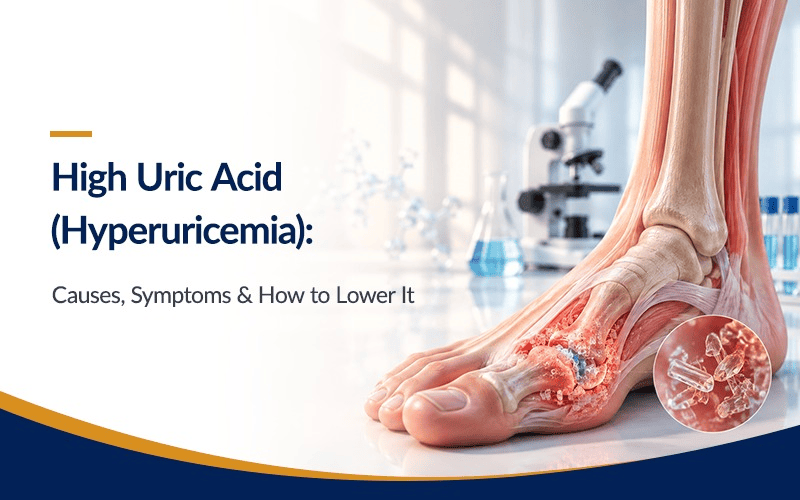
Hyperuricemia or high uric acid means the level of uric acid in your blood is higher than its normal value of 2.5 to 7.0 mg/dL for adult males and 1.5 to 6.0 mg/dL for adult females. Uric acid forms as a result of a natural process where your body breaks down purines. Research reveals that hyperuricemia affects more than 305 million women and 500 million men globally.
This condition appears when the body produces too much uric acid or when the kidneys remove very little of it. There are no symptoms of this disease in most cases. In some instances, it results in the development of gout or kidney stones. Some effective ways to lower uric acid levels include maintaining proper hydration, limiting purine-rich foods, and making minor lifestyle changes.
This blog looks into high uric acid in depth. It covers what causes this issue and how it affects your health. It also covers some easy ways to manage it. So let’s get right to it.
- What Is High Uric Acid or Hyperuricemia?
- What Causes High Uric Acid?
- Normal Uric Acid Level in Men and Women
- What Are the Symptoms of High Uric Acid?
- High Uric Acid in the UAE: Why Lifestyle Matters
- How to Lower High Uric Acid
- When Should You See a Specialist for Hyperuricemia?
What Is High Uric Acid Hyperuricemia?
Hyperuricemia is a medical term that shows a person has a higher than normal level of uric acid in their blood. Your body makes uric acid when it breaks down purines from the foods or drinks you consume. Uric acid is a normal waste product that your kidneys filter from the blood. After the filtration it comes out of your system through urine.
When uric acid level increases your body is not able to remove all of it. This results in its buildup in the form of tiny needle-shaped crystals called urates. Urates collect around your joints which results in gout or inflammatory arthritis in some cases. These stones can also build up in your kidneys resulting in kidney stones.
It is also important to note that high uric acid doesn’t always mean you also have gout or kidney stones. In some patients hyperuricemia appears without gout or kidney stones. Doctors mostly uncover this issue in routine blood tests.
Normal Uric Acid Level in Men and Women
It is important to have a clear idea about the normal uric acid level or its high threshold in terms of your gender and age. This can help you get timely consultations from healthcare specialists in Dubai to prevent complications down the line.
| Uric Acid | Men | Women | Children |
| Normal Range | 3.5-7.0 mg/dL | 2.5-6.0 mg/dL | 2.0 to 5.5 mg/dL |
| High Threshold | Above 7 mg/dL | Above 6 mg/dL | Above 6 mg/dL |
What Causes High Uric Acid?
There is rarely a single reason behind high uric acid in your body. Research shows major risk factors for high uric acid include reduced kidney function or chronic kidney diseases, obesity and metabolic syndrome, hypertension, type 2 diabetes, dyslipidemia, alcohol consumption, high intake of sugar-sweetened beverages/fructose or purine-rich foods, and genetic differences that affect urate transport and metabolism.
This section covers some key factors that play a big role.
- Your kidneys Are Not Able to Remove Enough Uric Acid
If your kidneys do not work optimally it can make it hard for your body to clear uric acid from your blood. Kidney disease in the UAE thus a major reason for high uric acid in most people.
- High Purines Diet
Purine rich foods such as organ meats, game meats, red meats, alcohol, yeast or seafood can also cause hyperuricemia.
- High Sugar or Fructose Drinks
Your uric acid level can also increase if you drink beverages with high sugar or fructose content regularly. Your body rapidly breaks down these drinks to produce purines and uric acid. More consumption thus results in more strain on your kidney which increases the risk of hyperuricemia.
- Excessive Alcohol Consumption
Alcoholic drinks especially beer increase the risk of hyperuricemia in most people. Alcoholic drinks have significantly high purine concentrations. These drinks also produce lactic acid. This acid competes with uric acid for clearance through the kidneys. This slows down the removal of purines which causes them to stay in your blood.
- Excess Weight
The risks of hyperuricemia are higher in people with excess body weight. As your weight increases it results in greater uric acid production. This increase in uric acid affects the ability of your kidneys to remove this waste.
- Genetics and Medications
Some people genetically have a higher tendency to retain uric acid. The risk of high uric acid rises in such cases. In some cases the medications you take for high blood pressure, fluid retention, or immune suppression can also increase hyperuricemia risks.
What Are the Symptoms of High Uric Acid?
Studies show there are no direct symptoms of hyperuricemia itself. However, you still need to look for sudden gout attacks, kidney diseases, or kidney stones. The presence of these diseases indicates you might have high uric acid.
- Symptoms Related to Gout
High uric acid makes you prone to gout. In this condition there is sudden intense pain in your joints along with swelling or discolored skin. You also feel warmth or tenderness around your joints. The joints that suffer from this condition also experience a reduction in mobility.
- Symptoms That Relate to Kidney Stones
High uric acid also manifests itself in the form of kidney stones. Larger stones lead to severe pain in the side or back. The pain radiates towards your groin. It also results in severe nausea or vomiting. If these conditions appear make sure to contact a urologist in Dubai to get a better assessment.
High Uric Acid in the UAE: Why Lifestyle Matters
High uric acid is a major concern in the UAE especially in Dubai, Abu Dhabi, and Sharjah. In most cases it has to do with the climate in the region and everyday lifestyle.
The climate of the region is very hot in the summer. This results in dehydration which directly links with hyperuricemia. People who spend most of their time outdoors for work or leisure commutes or drink insufficient water usually suffer from this condition.
Lifestyle factors like busy work schedules and frequent night outs in fine dining restaurants that serve sugary drinks or meats in the UAE also increase the risk of hyperuricemia. These factors make high uric acid prevention a major concern in the UAE.
How to Lower High Uric Acid
In most cases it is fairly easy to manage your uric acid levels if they are not significantly high. This section lists some simple tips that can help keep your uric acid levels in check.
- Maintain Proper Hydration
Hydration not only supports better kidney function but also results in faster uric acid elimination from your body. Make sure to discuss your body’s water or fluid intake needs with specialist doctors in Dubai to know how much you need to drink to maintain steady uric acid levels.
- Reduce High-Purine Food Intake
Make sure to consume high-purine foods in moderation. These foods include red meats or organ meats such as liver and kidney, certain shellfish and high-purine seafood, processed meats, alcohol, and beer.
- Cut Back on Sugary Drinks
You also need to cut your intake of sugary or fructose-rich drinks. This puts less pressure on your kidneys allowing them to work optimally to remove purines or uric acid.
- Maintain Healthy Body Weight
A healthy body weight also improves uric acid levels. For this purpose, you need to create a sustainable eating pattern with the help of expert dietitians.
- Review Your Medications and Health Conditions
You can also visit your doctor or a multispecialty hospital in Dubai for an assessment of your overall health or medication review. Specialists can notice the signs of high uric acid and pinpoint its underlying causes to help you manage this condition better.
- Add Fiber to Your Diet
A fiber-rich diet balances your blood sugar or insulin levels. It also increases the sensation of fullness. These factors lead to lower purine or uric acid production in your body.
When Should You See a Specialist for Hyperuricemia?
Right medical assessment from a rheumatologist in Dubai at the right time can save you from so much trouble down the line. For this reason you need to visit a specialist if.
- Your blood tests reveal persistently high uric acid values.
- There is severe pain or swelling around your feet, ankle, knees, hands, fingers, toes, or elbow joints.
- People with recent diabetes diagnosis or kidney stones should also visit a specialist to manage their uric acid levels.
Conclusion
High uric acid or hyperuricemia is a relatively common but silent condition that indicates a high uric acid level in your blood. This condition is linked directly with kidney stones or gout. However consultation with an expert along with some simple lifestyle changes can help lower your uric acid levels effectively.
To combat this issue you simply have to drink more water, eat a healthier diet with less purines, manage your weight, and reduce sugary drinks or alcohol intake.
Just make sure to consult with an expert in uric acid treatment to understand your individual risk and to prevent gout or kidney complications. These experts can give you a personalized treatment plan that results in better uric acid management for years.
Visit us at Dubai Medical University Hospital (DMUH) today to get in touch with top-level specialists in high uric acid or hyperuricemia treatment. Our DHA-approved healthcare professionals in Rheumatology, Internal Medicine, Endocrinology, Urology, and Dietetics in Dubai provide treatment pathways that lead to long-term relief from this serious condition in a patient-friendly atmosphere.
Disclaimer:
“This article is for informational purposes only and does not constitute medical advice. Always consult a qualified healthcare professional for diagnosis and treatment. If you are experiencing a medical emergency, call 998 (UAE) or visit the nearest emergency room immediately.”
