



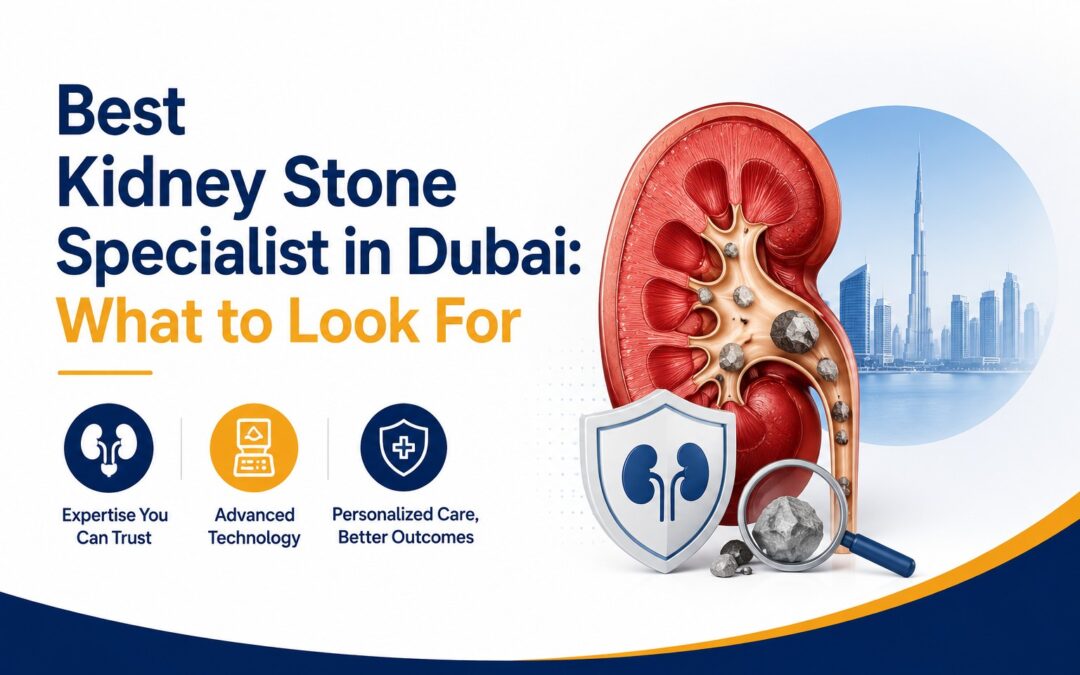
Kidney stones are among the most common urological conditions in the Emirates. The country’s hot climate, along with a dynamic, activity-based lifestyle, leads to dehydration. This dehydration is what results in kidney stones in most cases.Research into UAE adults found that approximately 6.1% of participants report having experienced kidney stones, while family history increases the risk by more than 2.2 times.
If you have experienced kidney stones before, then you already know that the pain they produce can be sudden, very intense, and frightening. However, immediate assistance from the urology specialist in Dubai can help you manage the symptoms and get rid of these stones quickly.
This blog covers how you can find the best kidney stone specialist in Dubai. This information will help you make a more educated choice based on several factors, such as experience, qualifications, overall patient experience, and more.
- What Is a Kidney Stone?
- Why Are Kidney Stones Common in the UAE?
- What to Look for in a Kidney Stone Specialist in Dubai
- Meet Dr. Yasser Farahat: Professor & Consultant Urology Department at Dubai Medical University Hospital (DMUH)
What Is a Kidney Stone?
Kidney stones refer to hard mineral or salt deposits that form inside the kidneys when minerals like calcium, oxalate, and uric acid in your urine concentrate and form crystals. Kidney stones can range in size from a grain of sand to a large pebble, which can block the urinary tract. This tract is what carries urine from the kidneys to the bladder. This blockage leads to severe pain and discomfort.
Here are some major symptoms that show you might have kidney stones.
- A very sharp flank or lower back pain.
- The pain radiates towards the groin.
- Your urine contains blood.
- You experience vomiting and nausea.
- There is a frequent urge to urinate.
- You feel a burning sensation while urinating
- You develop a fever and chills.
Why Are Kidney Stones Common in the UAE?
Studies show that people living in hot climates such as the UAE face substantially increased stone risk due to chronic dehydration and heat exposure. This is why it is safe to say that the climate of this region is the biggest contributor to the high kidney stone rates.The high temperature in the region leads to more fluid loss through sweating. This loss of fluid is what triggers the concentration of salts and minerals in the kidneys and promotes kidney stone formation.
Here are some additional factors that lead to higher rates of kidney stones in UAE residents.
- Inadequate daily water intake due to an active lifestyle.
- Consumption of diets high in processed food and salt.
- More consumption of animal protein.
- Obesity
- Family history of kidney stones.
- Specific medical conditions, such as diabetes.
Since the rate of this disease is high in this region, this is why there is a greater need to have access to specialists in kidney stone treatment in the Emirates like Dubai, Abu Dhabi, Sharjah, and other Emirates.
What to Look for in a Kidney Stone Specialist in Dubai
For kidney stone treatment, you need urologists from specialist healthcare services in Dubai. Urologists specialize in the diagnosis and treatment of conditions that affect your urinary tract or reproductive system.
However, not all urologists have the same level of expertise when it comes to providing assistance with complex or emergency kidney stone treatments.
This section lists some key things that you need to look for when selecting a specialist for kidney stone treatment in Dubai.
- Vast Experience in Kidney Stone Treatment
The experience of the specialist matters the most. You need someone who has been dealing with kidney stone patients for many years. You can ask the specialists about how many patients they treat each month and what their success rate is. A urologist with more years of experience can better diagnose and remove these stones with minimally invasive procedures.
- Access to Advanced Diagnostic Technology
Next, you need to ensure the specialist has access to modern diagnostic tools, including ultrasound imaging, CT scans (Computed Tomography scans, which create detailed cross-sectional images of the body), Digital X-rays, urine analysis, blood testing, and stone composition analysis. The availability of these tools ensures the specialist is able to diagnose and treat better.
- Focus on Prevention, Not Just Treatment
Professional urologists do not just focus on treatment. They also help you with the prevention of these stones in the future. They guide you in terms of dietary habits, proper hydration levels, and various metabolic factors.
Make sure the specialist you hire gives you guidance in terms of salt reduction, dietary modifications, weight management, and lifestyle changes to make sure the stones never return in the future.
- Strong Communication and Patient Education
Better communication and patient education are the trademarks of an expert kidney stone specialist. You need a specialist who listens to your concerns patiently and explains the diagnosis clearly.
Specialists in kidney treatments encourage questions, discuss every treatment option openly, and make you an active part of decision-making. If the specialist you have selected doesn’t meet these criteria, then you need to consider a better option.
- Multidisciplinary Care When Needed
Your kidney stone experts should be able to provide multidisciplinary care when you need it. They should have access to experts in diabetes, gout, obesity, hormonal disorders, and other underlying conditions that trigger stone formation. This collaboration with other experts, like nephrologists and nutritionists, allows them to prepare a more comprehensive treatment plan.
- Positive Patient Experience and Follow-Up Care
Your specialists should strive to create an overall positive experience before, during, and after the treatment. Experts know that the treatment doesn’t end once the kidney stones are out. This is why experts in the urology care remain accessible throughout the recovery phase as well.
They also offer additional follow-up care to make sure the patient feels at ease. Make sure the specialist you pick offers repeat imaging, urine testing, dietary counseling, monitoring for recurrence, and long-term prevention plans.
Meet Dr. Yasser Farahat: Professor & Consultant Urology Department at Dubai Medical University Hospital (DMUH)
Professor Yasser Farahat is a distinguished Urology Consultant with more than 35 years of experience in advanced minimally-invasive urological surgeries, endourology, and 360 degrees of men’s health. Dr. Farhat’s career as a urology consultant and a leader in healthcare spans several countries and organizations.
He has led the top urology organizations, including the Arab Association of Urology (AAU) and Urological Association of Asia (UAA). Currently, he is the president of the Society International De Urology (SIU), where he has made his mark as a compassionate, innovative, and result-driven healthcare professional.
Dr. Farhat further aims to advance healthcare with his academic contributions and the commitment to providing the best possible patient care.
Credentials: Education, Certifications, and Specializations
Prof. Farhat holds several distinguished professional certifications and has a remarkable educational background. This reflects their strong commitment to learning, growth, and excellence in urology as well as healthcare in general.
Here are some notable credentials that make him stand out.
- M.B.Ch.B., November 1990, Faculty of Medicine, Tanta University, Egypt.
- M. Sc. In April 1995, the Faculty of Medicine, Tanta University, Egypt.
- Doctorate in April 2004, Faculty of Medicine, Tanta University, Egypt.
- FEBU: Fellow of the European Board of Urology, 2014.
- FRCS: Fellow of the Royal College of Surgeons,2018, UK.
- Certificate of Leadership Principle, Harvard University, 2020, USA.
- Diploma of Hospital Management, Arizona University, 2020, USA.
- Professor of Urology, Faculty of Medicine, Tanta University, Egypt,
- Senior Consultant of Urology, SKGH, UAE.
- Honorary clinical Tutor at Edinburg university, UK.
- Honorary lecturer at Dubai Medical College, UAE (ended 2014).
- Associate professor, Sharjah University, UAE, 2017 to present.
- Certified trainer of the trainers (TOT), Ministry of Higher Education – Egypt.
- Secretary General of the Arab Association of Urology (2015 till present).
- Chairman of Arab School of Urology,2017 till present.
- Co-Chairman of the Scientific Committee of the Asian Urological Association (UAA).
- Head of scientific & Educational Committee of the Emirates Urological society 2015-till present.
- Member of the Global Research Committee, SIU – U-Care.
- Co-Chairman of the World Congress of Video-Urology, 2017, Abu Dhabi, UAE.
- Co-Chairman of World Congress of Endourology (WCE) 2019, Abu Dhabi, UAE.
- Board member of the membership committee of endourology society, 2020 2024.
- Co-Chairman of the Society International De Urology (SIU) annual Congress 2021, Dubai, UAE.
- President of the Urological Association of Urology 2023
- President of the Society international De Urology (SIU), 2025 till present)
Core Competencies
Professor Farhat has decades of experience in managing prostate diseases, urinary stones, and genital reconstructive surgeries. His advanced training in Robotic Retrograde Intrarenal Surgery, along with vast clinical expertise and commitment to compassionate care, allows him to ensure optimal medical outcomes.
Here are some of his core competencies.
- Dr. Farhat specializes in urinary stone treatment using state of the art uro–technology surgical techniques.
- He is skilled in minimally invasive Lower Urinary Tract surgeries and advanced diagnostic procedures.
- He specializes in regenerative therapies and male genital prosthetic treatments.
- He also has vast experience in managing complex or chronic health conditions in multidisciplinary approach.
- He is adept at patient-centered and follow-up care of patients who suffer from neurogenic Voiding Dysfunction.
- Prof. Farhat also has a strong academic and research background with more than 45 publications. He has also delivered over 100 presentations at international and regional conferences.
Conclusion
Kidney stone treatment can be very daunting. However, with the right diagnosis and timely intervention by an expert in the field, it is possible to minimize health risks and manage pain.
Finding a qualified kidney stone specialist is thus extremely important as it guarantees greater success rates and faster recovery. When looking for a specialist for this treatment, make sure you choose someone who has more experience, access to specialized diagnosis and treatment tools, and a greater success rate.
Your best option is a specialist who uses minimally invasive treatment options, communicates openly, and offers better follow-up care. This leads to a more personalized treatment, which guarantees a successful procedure and the prevention of future stone formation.
Visit us at Dubai Medical University Hospital (DMUH) today to book an appointment with the best urologist and kidney stone specialist in Dubai. Our dedicated healthcare teams provide compassionate and patient-centered care with their vast experience in kidney stone removal and general patient comfort and care.
FAQs
When do I need to see a kidney stone specialist in Dubai?
You need to see a kidney stone specialist if there is intense back or side pain that comes in waves. Other signs include burning sensation and blood while urinating, recurrent urinary tract infections, nausea, vomiting, and fever.
Which type of doctor treats kidney stones?
Urologists specialize in kidney stone diagnosis and treatment procedures.
What is the reason for more kidney stone cases in the UAE?
These include hot climate, less water intake, and more fluid loss, which results in dehydration and the formation of kidney stones.
What should I look for in a kidney stone specialist in Dubai?
You need to look for the years of experience, public reputation, access to state-of-the-art tools, communication approach, and general patient-care practices of the specialist when making this decision.
Disclaimer:
“This article is for informational purposes only and does not constitute medical advice. Always consult a qualified healthcare professional for diagnosis and treatment. If you are experiencing a medical emergency, call 998 (UAE) or visit the nearest emergency room immediately.”
